A New Approach to Depression Treatment
TRANSCRANIAL MAGNETIC STIMULATIONWhen antidepressants and therapy haven’t provided enough relief, Transcranial Magnetic Stimulation (TMS) offers a noninvasive treatment option — without medication, anesthesia, or downtime.
Anew TMS Clinic provides physician-led TMS treatment in Santa Fe, New Mexico. We combine established treatment protocols with careful attention to emerging research in neuromodulation, allowing us to offer both standard and more innovative treatment approaches when clinically appropriate.

Noninvasive
No surgery or anesthesia

No downtime
Return to your day


Covered by many insurance plans
including Medicare
No systemic medication
A different option

A DIFFERENT WAY FORWARDDepression can be difficult to treat.
For some people, medications cause unwanted side effects. For others, several medications and years of therapy still haven't provided adequate relief.
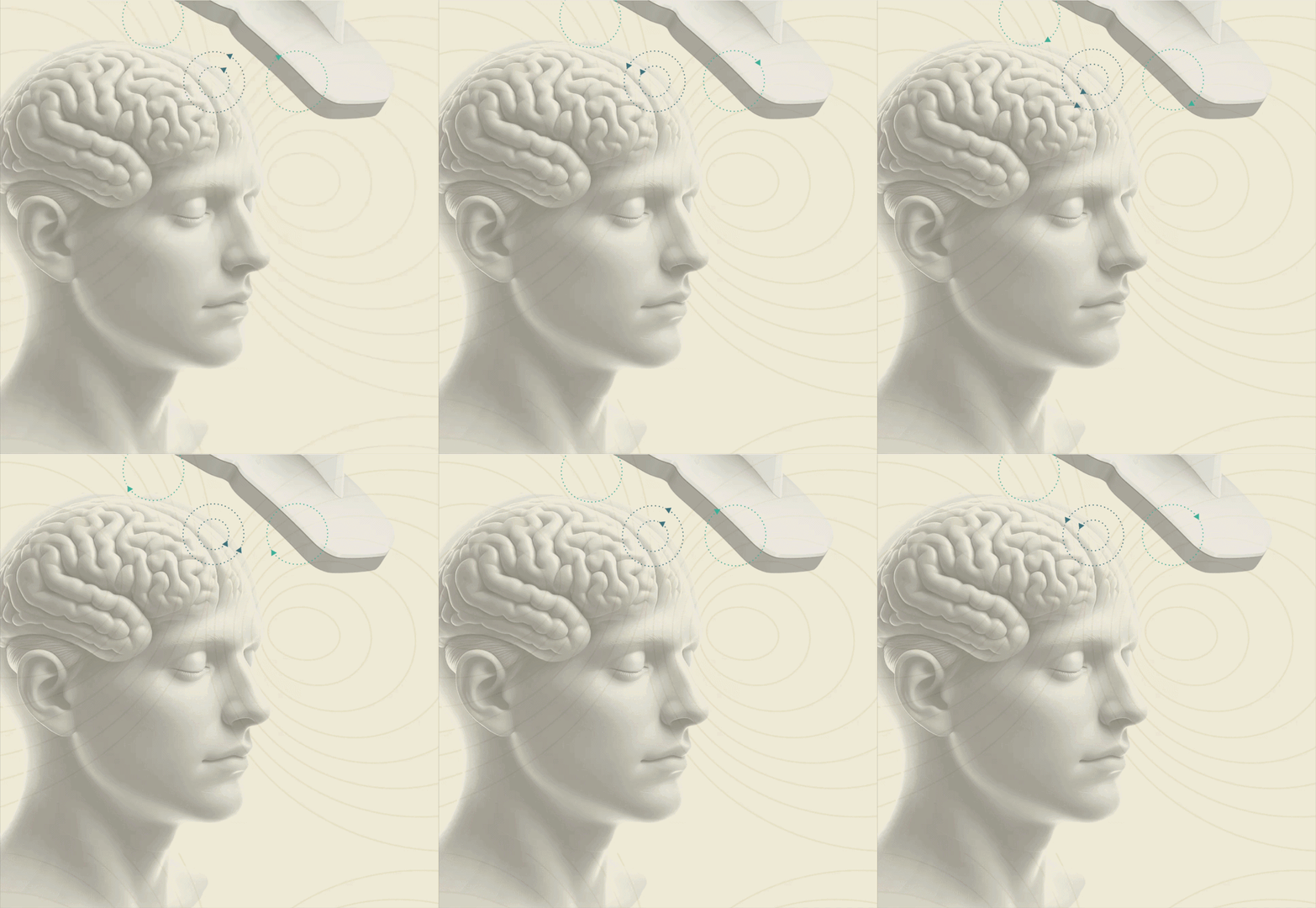
TMS uses precisely targeted magnetic stimulation to activate areas of the brain involved in mood regulation. Treatment is performed while you are awake and allows you to return to your normal activities immediately afterward.

“There is hope, even when you've tried everything else”
IS TMS RIGHT FOR ME?TMS may be worth considering if you:
✔️ Have been diagnosed with major depressive disorder
✔️ Haven’t experienced adequate improvement with antidepressant medication
✔️ Have had difficulty tolerating medication side effects
✔️ Continue to experience depression despite psychotherapy and medication
✔️ Are looking for a noninvasive treatment option
You do not need to have a psychiatrist in Santa Fe to contact us. We can determine whether a TMS evaluation is appropriate and coordinate with your existing providers when needed.

YOUR TREATMENT JOURNEYA clear personalized path.
① Evaluation
Comprehensive psychiatric evaluation to determine if TMS is right for vou.
② Insurance Authorization
We work with your insurance plan to confirm benefits and obtain authorization.
③ Personalized Mapping
We determine your motor threshold and customize your treatment settings.
④ Begin Treatment
TMS is performed in our Santa Fe office. You remain awake and can drive yourself home afterward.
⑤ Ongoing Monitoring
We track your progress throughout treatment to guide your care.
WHAT MAKES US DIFFERENTAnew TMS’s care stands out

Physician-Led Care
Every patient is evaluated by a board-certified psychiatrist who remains actively involved throughout treatment.
Personalized to You
Your treatment is based on your diagnosis, symptoms, history, and response to care—with individualized mapping and settings determined by Dr. Stone.
Optional AI-guided CBT support
Included for eligible patients, AI-guided CBT support is available as part of your treatment plan to help reinforce the progress you're making between TMS sessions.
More Than One Path to Treatment
From accelerated 1-day and 5-day treatment options to the traditional 30-session course, Anew offers multiple TMS pathways based on your clinical needs, schedule, and goals.
WHAT MAKES US DIFFERENTGrounded in evidence. Open to what’s possible.
Anew TMS goes beyond a one-size-fits-all approach to neuromodulation.
In addition to established TMS treatments like major depression and treatment resistant depression, Dr. Stone closely follows emerging research exploring how TMS may support other psychiatric and neurological conditions (e.g., OCD, memory loss, anxiety disorders and PTSD symptoms)
For select patients, we may discuss investigational uses of TMS when there is meaningful clinical evidence to support consideration.
These applications are not FDA-cleared for the condition being treated and may require self-pay. Dr. Stone reviews the available research, potential benefits, limitations, and risks with each patient before any treatment is recommended.

Treatment That Fits Into Your Life
TMS is an outpatient treatment with no anesthesia and no recovery period.
For many patients, it becomes a short, predictable part of the day.