

A noninvasive treatment for depression—without medication or downtime.
TMS uses targeted magnetic pulses to stimulate areas of the brain involved in mood regulation.
WHAT IS TMS?What TMS actually does
Transcranial Magnetic Stimulation, or TMS, is a noninvasive treatment for depression that uses targeted magnetic pulses to stimulate areas of the brain involved in mood regulation.
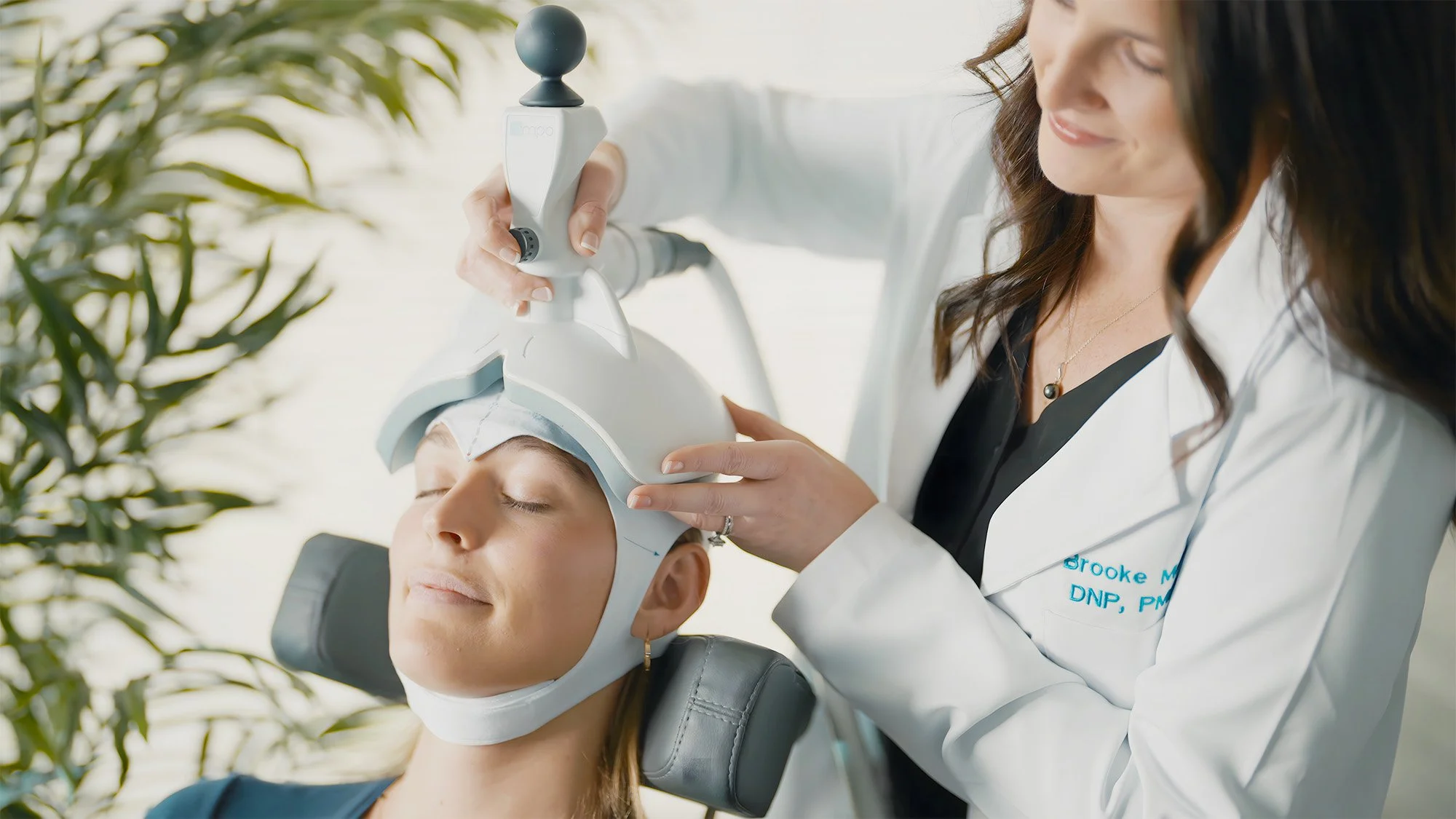
Treatment is delivered through a small coil placed against the scalp while you remain awake and alert. Unlike medication, TMS works locally rather than circulating throughout the body, and it does not require anesthesia or a recovery period.
“Targeted treatment, without medication circulating throughout the body.”
What happens during a TMS session?
① You get comfortable.
You sit in a treatment chair while awake and alert.
② The treatment coil is positioned.
A small coil is placed against your scalp over the treatment area.
③ Stimulation begins.
You may hear clicking and feel a tapping sensation during treatment.
④ You continue with your day.
Typical treatment sessions at Anew are about three minutes, and there is no anesthesia or recovery period.
What does the research say?
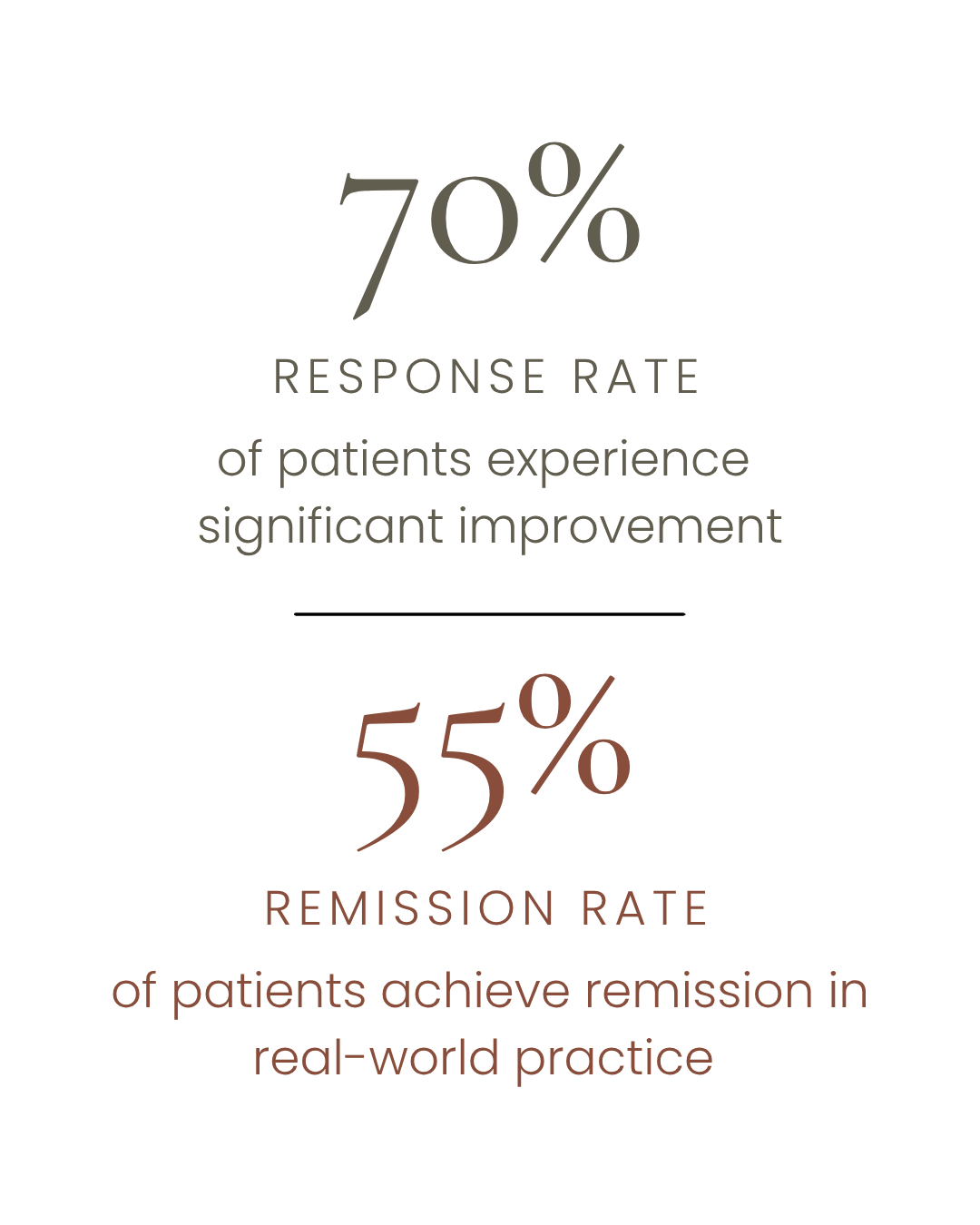
TMS has been studied extensively in people with depression, particularly those who have not experienced enough benefit from antidepressant medication. Real-world studies have reported response rates around 70%* and remission rates around 55%* in some treatment settings, although outcomes vary by patient, protocol, and how improvement is measured.
Research also suggests that the benefits of TMS can be durable for many patients, with continued improvement after the initial treatment course. As with any treatment, individual results vary, which is why progress is monitored carefully throughout care.
*Left Prefrontal Intermittent Theta-Burst Stimulation Therapy for Major Depressive Disorder: A Real-World, Multisite Observational Study in Japan. Journal of Affective Disorders. 2025. Noda Y, Osawa R, Takeda Y, et al.
How TMS compares
TMS is one of several evidence-based treatment options for depression. Each works differently and may be appropriate at different points in care.
TMS vs. Antidepressants
Antidepressants work throughout the body by altering brain chemistry, while TMS is a targeted, noninvasive treatment that stimulates specific brain regions involved in mood regulation.
TMS is often considered when medication has not provided enough relief or has caused difficult side effects.
Many patients continue medication while receiving TMS, and research suggests that combining TMS with antidepressants can improve outcomes for some individuals.
TMS vs. Ketamine
TMS and ketamine are both used for treatment-resistant depression, but they work in different ways.
TMS uses magnetic stimulation and is delivered without medication or sedation.
Ketamine is a medication that acts on the brain’s glutamate system and can sometimes produce improvement more quickly, including within days. The right option depends on your symptoms, treatment history, and goals.
What to expect over time

Improvement with TMS is usually gradual. Some people begin noticing changes in mood, energy, sleep, or motivation during the first few weeks of treatment, while others notice improvement later in the course.
Not everyone responds the same way, and your progress is monitored throughout treatment so your care can remain thoughtful, individualized, and evidence-based.

Treatment That Fits Into Your Life
TMS is an outpatient treatment with no anesthesia and no recovery period.
For many patients, it becomes a short, predictable part of the day.