

A CLEARER TOMORROW WITHIN REACHIs TMS Right For Me?
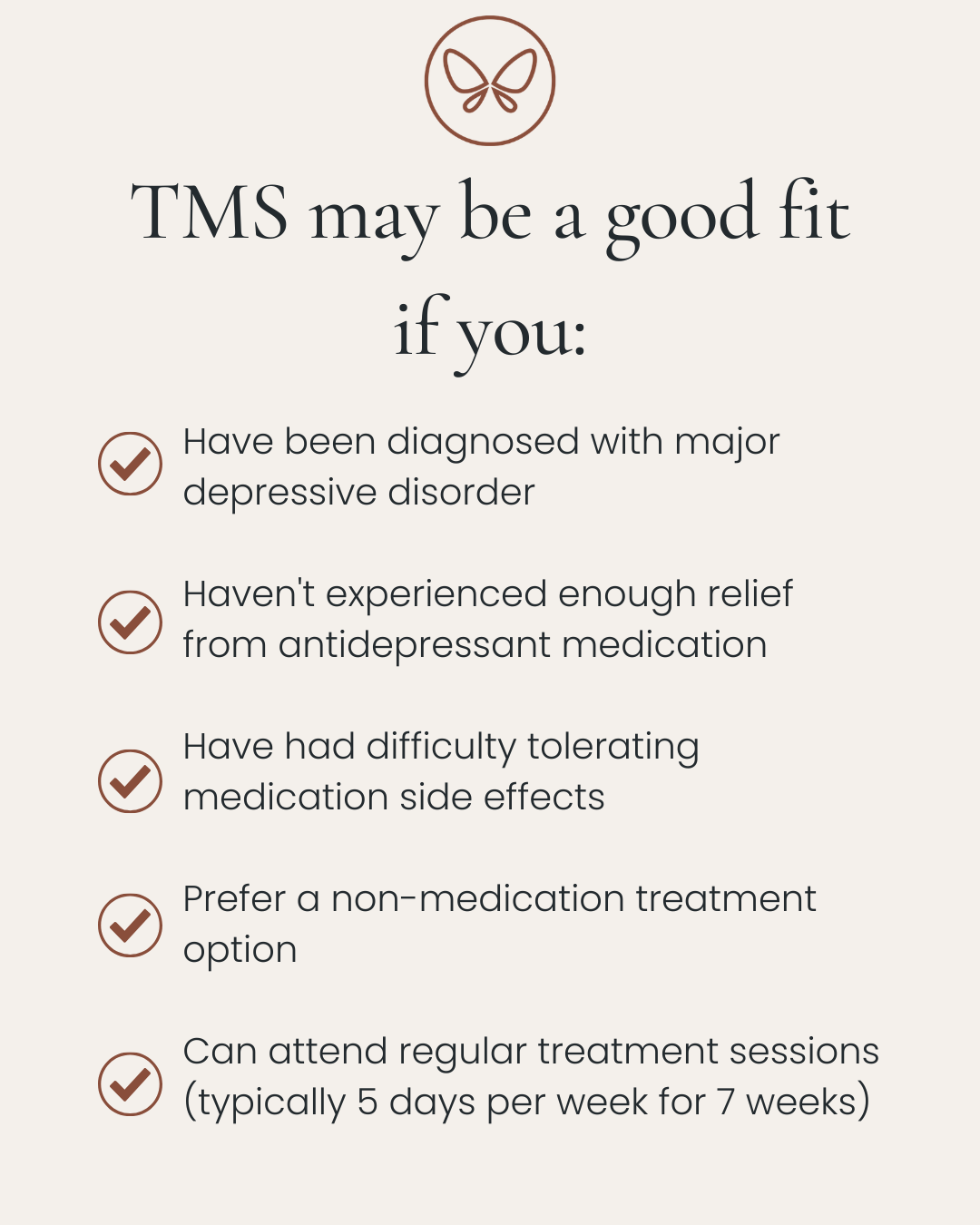
TMS may be worth considering if you've been struggling with depression and haven't found enough relief with medications or therapy-or if you prefer a non-medication approach.
Every patient at Anew TMS is carefully evaluated by Dr. Sarah Stone, a board-certified psychiatrist, to determine whether treatment is appropriate and safe for your individual needs.
THE TREATMENT COMMITMENTIs TMS realistic for your schedule?
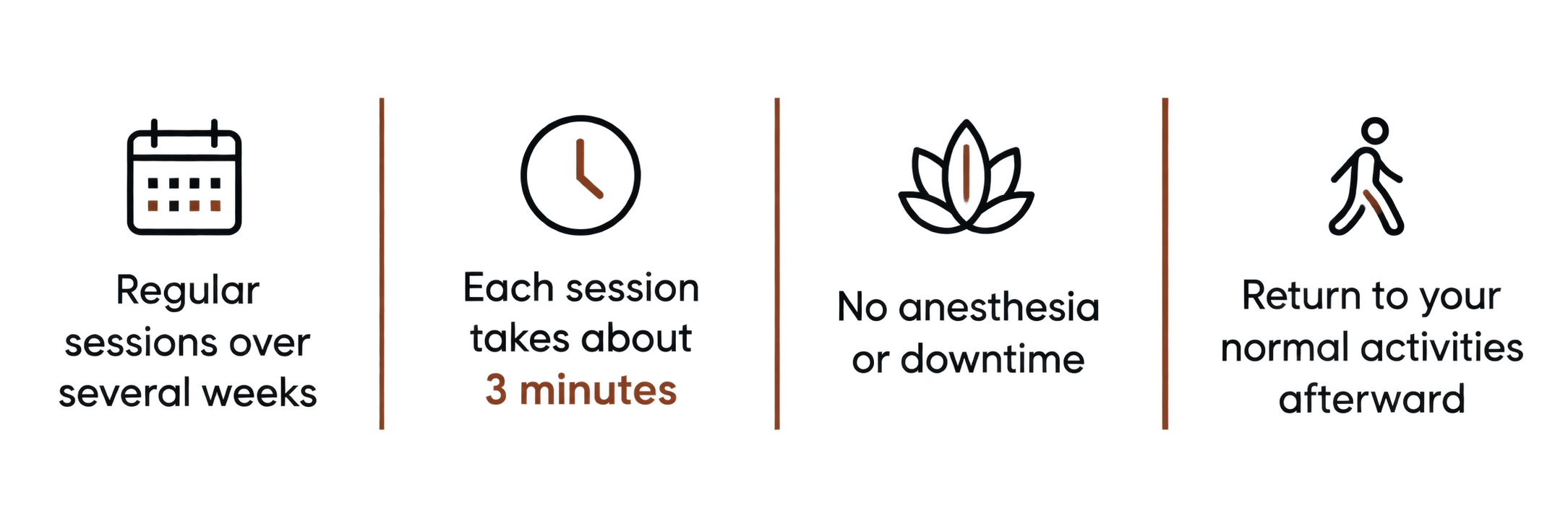
TMS is an outpatient treatment performed while you are awake. A typical treatment course involves regular sessions over several weeks. There is no anesthesia or recovery period, so you can return to your normal activities immediately afterwards.

SUPPORT IS HERE An expert will help you decide.
You do not need to know whether you qualify before reaching out. Determining whether TMS is appropriate is part of your evaluation. Dr. Stone will review your symptoms, treatment history, medications, medical history, and goals with you and answer any questions you have about the process.
TMS can be part of your existing care.
You do not need to transfer your psychiatric care to Anew TMS.
We can work alongside your psychiatrist, primary care clinician, psychiatric nurse practitioner, therapist, or other healthcare provider while you receive TMS With your permission, we can keep your provider informed throughout treatment so your care remains coordinated.
Don't currently have a provider? We can help connect you with local clinicians who provide ongoing care for depression.
Common Questions
-
TMS may be worth exploring if you’re living with depression and haven’t experienced enough relief from medication or therapy, have had difficulty tolerating medication side effects, or are interested in a non-medication treatment option.
Dr. Stone personally evaluates each patient to determine whether TMS is appropriate based on your symptoms, treatment history, medical history, and goals.
-
TMS is an FDA-cleared, noninvasive treatment that does not require medication, anesthesia, or surgery.
Most side effects are mild and temporary, such as scalp discomfort or headache during or after treatment. Serious side effects are uncommon, although seizures can occur in rare cases.
Before treatment begins, Dr. Stone will review your medical history and potential risk factors to determine whether TMS is appropriate for you.
-
The duration of improvement varies from person to person. Some patients experience benefits for many months or longer, while others may eventually benefit from additional treatment.
Continuing other parts of your mental health care—including medication or psychotherapy when appropriate—may also help support your progress after TMS.
-
Many people who receive TMS have previously tried one or more antidepressant medications without enough improvement or with side effects they found difficult to tolerate.
Specific requirements can vary based on your clinical history and insurance plan. Dr. Stone will review your previous treatments during your evaluation.
-
Many patients continue their prescribed medications while receiving TMS. Dr. Stone will review your current medications before treatment and let you know whether any changes or additional considerations are needed.
-
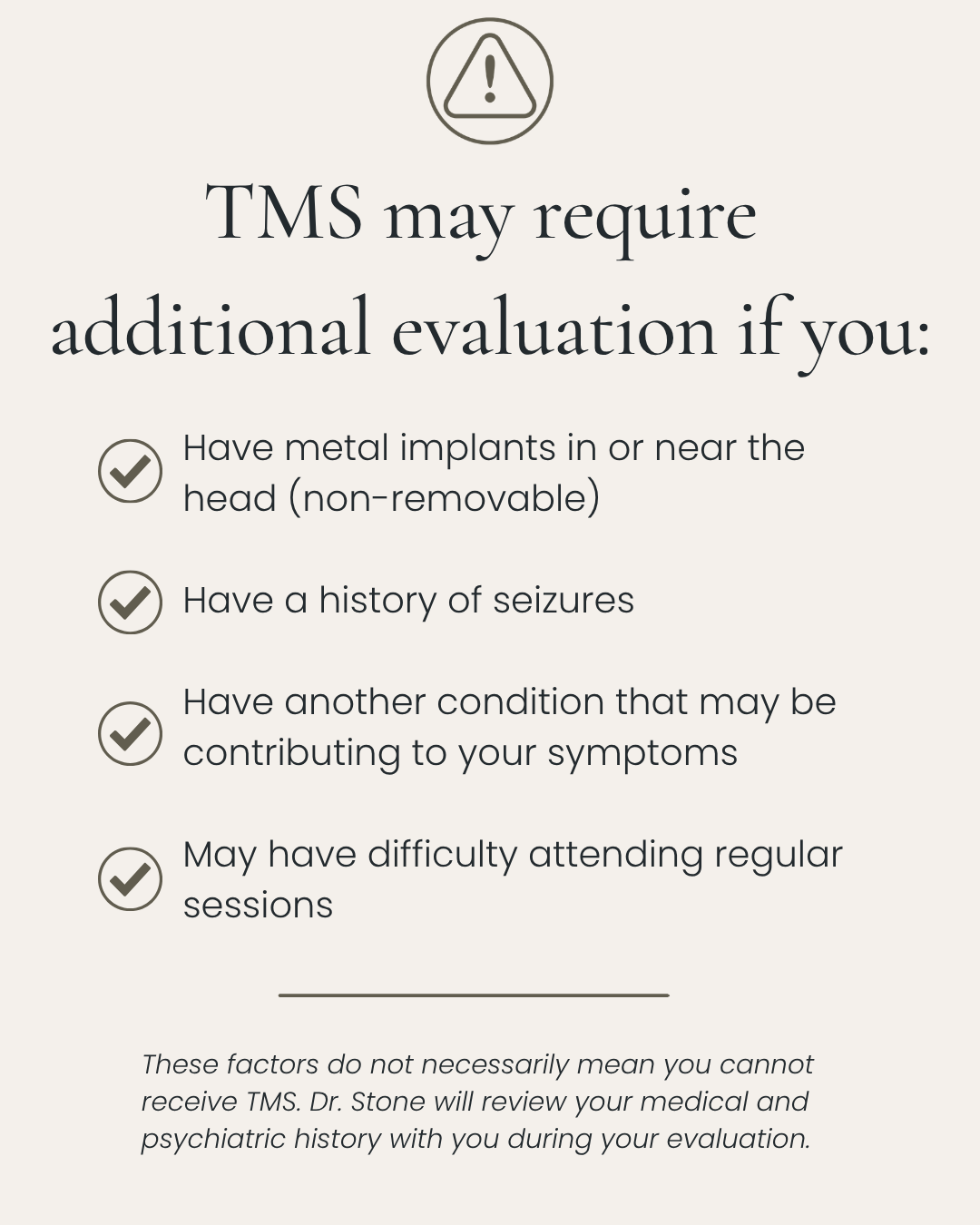
Certain medical or neurological conditions may require additional evaluation before TMS treatment, including a history of seizures or certain neurological conditions.
Some types of metal or implanted devices in or near the head may affect whether TMS is appropriate. Other implants may not prevent treatment.
Dr. Stone will carefully review your medical history to determine whether TMS can be provided safely.
-
Start by contacting Anew TMS to request an evaluation. Our team will gather some basic information, help review your insurance benefits when applicable, and schedule an evaluation with Dr. Stone.

Treatment That Fits Into Your Life
TMS is an outpatient treatment with no anesthesia and no recovery period.
For many patients, it becomes a short, predictable part of the day.